

By Jeff Zen
Introduction
The landscape of the American professional world has undergone a seismic shift over the last few years. What began as a temporary response to global events has matured into a permanent fixture of the US economy: the remote and hybrid work model. According to recent data from Forbes Advisor, nearly 12.7% of full-time employees now work from home, while a staggering 28.2% navigate a hybrid schedule. While this transition has eliminated the dreaded morning commute and offered unprecedented flexibility, it has also introduced a quiet crisis regarding physical health. As the lines between our living spaces and professional hubs continue to blur, the demand for sophisticated ergonomic office solutions has moved from a corporate "perk" to an absolute health necessity.

For the modern professional, the "office" is no longer a sea of gray cubicles but a curated corner of the home. However, many workers are still operating from dining room chairs or soft sofas that were never intended to support an eight-to-ten-hour workday. The physical toll of this setup is cumulative and often debilitating. Without the proper structural support, the human body begins to compensate for poor posture, leading to a cascade of musculoskeletal issues. In the United States alone, back pain remains one of the leading causes of missed workdays, and for those in high-pressure roles—tech leads, creative directors, and corporate executives—staying sedentary in a non-ergonomic environment is a recipe for long-term injury.
The common physical symptoms of an inadequate workspace include:
- "Tech Neck": Chronic strain on the cervical spine caused by looking down at screens.
- Lumbar Fatigue: The flattening of the lower back’s natural curve, leading to disc pressure.
- Circulatory Stagnation: Reduced blood flow to the lower extremities from poorly designed seat pans.
- Shoulder Tension: Elevation of the trapezius muscles due to improper armrest heights.
Recognizing these challenges, Sunaofe was established to bridge the gap between clinical health requirements and high-end interior design. Our philosophy, encapsulated in the slogan "So Now Feel," is built on the belief that you should never have to choose between a chair that saves your spine and a chair that complements your home’s aesthetic. We view the workspace as a sensory experience—one that should inspire creativity and project professional status while providing the rigorous support required for peak performance.
At the heart of our mission is the perfect intersection of ergonomics and aesthetics. We don't just sell furniture; we provide an ecosystem designed for the human form in motion. Whether you are a designer who needs a vibrant environment to spark inspiration or an executive who requires a command center that reflects your leadership status, the right ergonomic office solutions do more than just support your spine—they enhance your cognitive clarity and overall well-being.
In this guide, we will explore the essential components of a high-performance workspace, from the mechanics of adaptive lumbar support to the psychological benefits of a minimalist setup. As we dive into the science of sitting, you will learn how about Sunaofe and our commitment to premium engineering can help you reclaim your health without sacrificing the beauty of your home. Investing in professional ergonomic office solutions is no longer a luxury; it is a commitment to your long-term career longevity and personal vitality.
The Science of Sitting: Why Your Setup Matters
To understand why high-end workspace design is critical, one must first look at the biological reality of the human body: we are an engine designed for movement. Evolutionarily, our skeletal and muscular systems were built for walking, reaching, and active engagement with our environment. However, the modern professional reality demands the opposite. When we spend the majority of our waking hours in a seated position, we are effectively asking our bodies to perform a task they weren't designed for. This is where the science of sitting becomes a vital field of study for anyone looking to maintain a high-performance career without physical compromise.
The risks of a sedentary lifestyle are well-documented and extend far beyond simple muscle stiffness. According to a Mayo Clinic study on the risks of sitting, prolonged periods of inactivity are linked to a cluster of health concerns, including increased blood pressure, high blood sugar, and excess body fat around the waist. For the office-bound professional, however, the most immediate threat is to the spine. When sitting in a non-ergonomic chair, the pelvis often tilts backward, which flattens the natural inward curve of the lower spine—a condition known as lumbar kyphosis. This misalignment places up to 40% more pressure on the spinal discs than standing does, leading to the chronic discomfort many of us know all too well.

Implementing professional ergonomic office solutions for lower back pain is not just about adding a cushion; it is about mechanical intervention. A truly ergonomic setup works to maintain the "S-curve" of the spine, ensuring that the weight of the upper body is distributed evenly across the intervertebral discs. This prevents the concentrated pressure that leads to herniation or chronic nerve impingement. By utilizing ergonomic office solutions that offer adjustable lumbar depth and height, users can "lock in" a support system that mirrors their unique spinal profile, effectively neutralizing the gravity-induced strain of a long workday.
However, modern ergonomics has evolved past the traditional idea of "static" support. For years, experts recommended sitting at rigid 90-degree angles. Current research suggests that "the best posture is your next posture." Static sitting—holding any single position for too long—restricts blood flow and causes muscle fatigue. The frontier of workspace health now focuses on dynamic sitting. This concept encourages micro-movements throughout the day, allowing the chair to move with the user rather than forcing the user to adapt to the chair.
When the workspace is designed to facilitate movement, the benefits are both physical and cognitive. Proper blood circulation ensures that oxygen reaches the brain more efficiently, reducing the "afternoon slump" and enhancing focus. This is why many forward-thinking companies are now seeking out enterprise solutions to outfit their teams with equipment that prioritizes biological needs. By investing in scientifically-backed ergonomic office solutions, you are doing more than buying furniture; you are installing a preventative health system. You are moving from a state of physical endurance to a state of physical optimization, allowing you to finish your workday feeling as energized as when you started.
What Defines the Best Ergonomic Office Chair for Long Hours?
When shopping for a workspace upgrade, the term "ergonomic" is often used as a catch-all marketing buzzword. However, for the high-performing professional spending upwards of 50 hours a week at a desk, a label isn't enough—you need specific, evidence-based engineering. Identifying the best ergonomic office chair for long hours requires looking beyond the surface and evaluating how a chair manages the three pillars of seated health: thermal regulation, pressure distribution, and spinal alignment.
One of the most critical features for long-term comfort is material choice. In a standard foam-based chair, heat often becomes trapped between the user’s body and the seat, leading to discomfort and "sweat fatigue" that can derail focus. High-quality ergonomic office solutions frequently utilize premium, breathable mesh. This material allows for constant airflow, maintaining a neutral skin temperature and providing a responsive surface that contours to the body without losing its shape over time.

Beyond materiality, the adjustability of the seat pan is often overlooked. A chair that is too deep can cut off circulation behind the knees, while one that is too shallow fails to support the thighs, leading to increased pressure on the hips. To combat this, look for chairs that offer adjustable seat depth and height. This ensures that your feet remain flat on the floor while your thighs are parallel to the ground, a position that minimizes the load on your lower circulatory system.
However, the true "game-changer" in modern workspace design is the shift from static to dynamic support. An adaptive lumbar support chair for WFH professionals is fundamentally different from a traditional office chair. While a standard chair might have a fixed lumbar pad that requires manual adjustment, adaptive systems are engineered to respond to your micro-movements. Whether you lean forward to focus on a spreadsheet or recline during a conference call, the lumbar support tracks your spine’s position in real-time. This proactive engagement prevents the "slump" that typically occurs as the day progresses and muscles begin to tire.
For many US consumers, the challenge lies in how to choose ergonomic office solutions for home office environments that don't look like clinical medical equipment. The traditional "office" aesthetic is often bulky and utilitarian, clashing with the curated decor of a modern home. Sunaofe addresses this by adhering to our core value: the perfect intersection of ergonomics and aesthetics. We believe that a chair should be a statement piece—an extension of your personal style that happens to provide world-class physical support.
When evaluating ergonomic office solutions, consider these essential specifications:
- 4D Armrests: Ability to adjust height, width, depth, and angle to prevent shoulder strain.
- Synchro-Tilt Mechanisms: Allows the backrest and seat to tilt at different ratios, keeping the feet on the floor during a recline.
- Weight-Sensitive Tension: Automatically adjusts the resistance of the recline based on the user's body weight.
The Morph Series: Adaptive Support for High-Performance Work
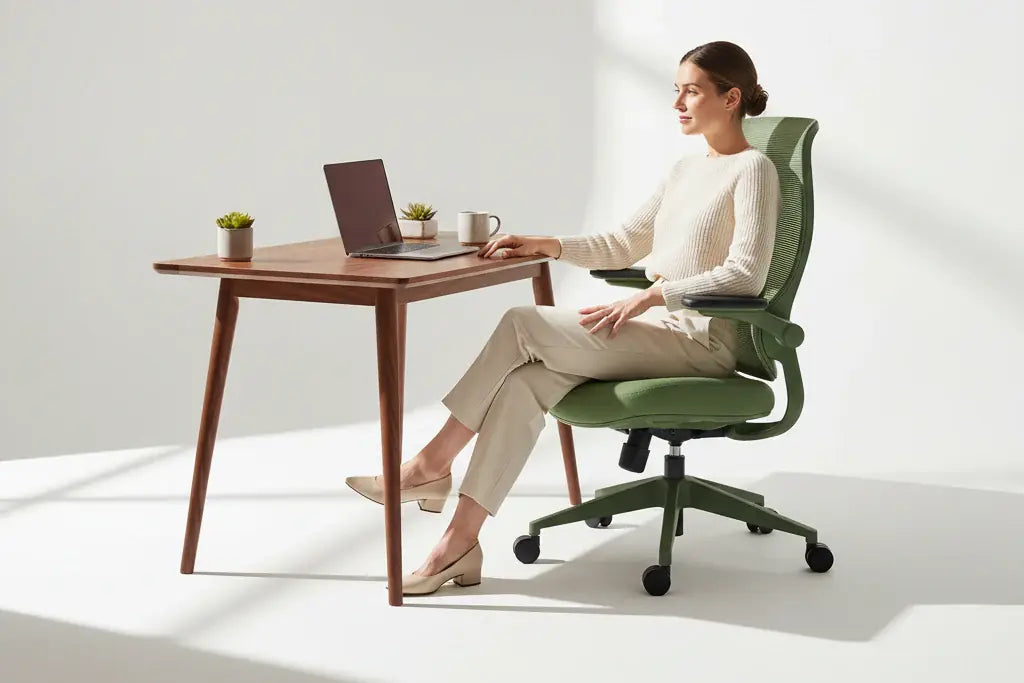
For the tech-savvy professional or the creative director, the workspace is more than just a place to sit; it is a high-performance environment where every tool must earn its place through both utility and design. While many chairs claim to offer "comfort," few are engineered to handle the complex, multi-directional movements of a modern workday. This is precisely where the Morph Series distinguishes itself from traditional ergonomic office solutions. By shifting the focus from static support to active adaptation, the Morph Series represents the next evolution in professional seating.
The centerpiece of this series is its revolutionary auto-tracking lumbar support system. Most high-end chairs require the user to manually adjust a dial or lever to find the "sweet spot" for their lower back. However, humans are naturally restless; we lean in to analyze code, we recline to contemplate a design layout, and we twist to reach for a second monitor. In a traditional chair, these movements often leave the lumbar region unsupported for significant portions of the day. Understanding how Morph's auto-tracking lumbar support helps maintain spinal integrity is key to understanding its value. The mechanism is designed to follow the user’s back in real-time, providing constant, proactive pressure that neutralizes spinal load regardless of your posture.

This level of technical sophistication makes the Morph Series the preferred modern ergonomic office furniture for creative professionals and tech-savvy individuals who demand a "set-it-and-forget-it" level of efficiency. In the fast-paced US tech and creative sectors, the last thing a professional needs is a chair that requires constant tinkering. The Morph Series streamlines the user experience by automating the most critical aspect of ergonomics: the relationship between the seat and the spine.
Beyond the lumbar system, the Morph Series is a masterclass in balancing a minimalist ergonomic office setup for productivity with high-end engineering. Its silhouette is sleek and unobtrusive, making it an ideal fit for modern home offices where space is at a premium and aesthetics are non-negotiable. Yet, beneath that minimalist exterior lies a suite of professional-grade features:
- Weight-Sensitive Synchro-Tilt: The chair automatically calculates the correct amount of recline tension based on your body weight, ensuring a smooth, effortless transition between upright and reclined positions.
- 4D Tactile Armrests: These allow for precise adjustments in height, depth, width, and angle, ensuring that your wrists and elbows are always at the optimal 90-degree angle for typing or drawing.
- Multi-Dimensional Mesh: The high-tensile mesh used in the Morph Series is engineered to provide firm support while allowing for maximum airflow, preventing the heat buildup that often plagues long hours of deep work.
Investing in Quality: Beyond the Initial Purchase
When evaluating the cost of a home office upgrade, it is easy to fall into the trap of viewing furniture as a simple expense. However, for the high-level professional, the perspective should shift toward Return on Investment (ROI). In the United States, where the "fast furniture" culture often prioritizes low entry prices over long-term durability, many consumers find themselves replacing chairs every two years due to mechanical failure or sagging support. Choosing high-end ergonomic office solutions is an investment in your most valuable asset: your physical and cognitive health.
The true value of executive ergonomic office chairs for home office use lies in their ability to mitigate the cumulative costs of poor health. Chronic back pain and repetitive strain injuries don't just cause physical discomfort; they lead to decreased focus, reduced billable hours, and potential medical expenses. If you consider that a full-time professional spends approximately 2,000 hours a year at their desk, a premium chair is one of the few tools in your life that sees more use than your car or even your mattress. When viewed through this lens, the price of a professionally engineered chair becomes a negligible cost per hour for a significant gain in daily vitality.
Beyond the immediate physical benefits, there is the critical factor of "peace of mind." For a workspace to be truly effective, it must be reliable. This is why understanding how to choose ergonomic office solutions for long hours involves looking at the build quality and the manufacturer's commitment to their product. Sunaofe’s furniture is built to "enterprise-grade" standards—a term that refers to the rigorous durability testing required for heavy-use corporate environments. This means the gas lifts, casters, and tilt mechanisms are designed to withstand years of constant adjustment without losing their precision.
A key differentiator for a high-end brand is the support structure that follows the purchase. In the US market, a robust warranty is a hallmark of quality and a sign that a brand stands behind its engineering. When you invest in ergonomic office solutions, you should look for a clear, transparent warranty policy that protects your investment against manufacturing defects. This level of protection ensures that your focus remains on your work, rather than on the maintenance of your equipment.
Furthermore, a professional-grade setup offers a psychological "status" benefit. For corporate executives and creative leaders, the home office is often the backdrop for high-stakes video calls and virtual leadership. A chair that reflects an "executive status" while providing world-class ergonomics sends a message of professionalism and attention to detail. It creates a "command center" environment that fosters a deep-work mindset.
In summary, the transition from a standard chair to a premium ergonomic system is a move from "surviving" the workday to "thriving" within it. By prioritizing enterprise-grade durability and long-term support, you are ensuring that your workspace remains a sanctuary of productivity for years to come.
Key Investment Considerations for US Professionals:
- Cost Per Use: Divide the price of the chair by 10,000 hours (a typical 5-year lifespan) to see the true hourly cost of health support.
- Material Longevity: Premium Leather Pro or high-tensile mesh will outlast standard fabrics, maintaining their aesthetic and structural integrity.
- Support Ecosystem: Access to responsive customer service and clear return/warranty paths is essential for remote workers who cannot afford downtime.
Conclusion
The journey toward a truly optimized workspace is more than a simple furniture upgrade; it is a fundamental shift in how we approach our professional lives. Throughout this guide, we have explored the biological imperatives of spinal health, the technical nuances of adaptive support, and the long-term ROI of investing in premium equipment. What remains is the most important realization: the tools you choose to surround yourself with dictate the quality of your daily experience. When you integrate high-end ergonomic office solutions into your home, you are not just buying a place to sit—you are designing a catalyst for your best work.
The transformation that occurs when moving from a standard setup to a professional-grade environment is often immediate and profound. It is found in the absence of the "5 PM ache" in your lower back. It is found in the ability to remain in a state of deep flow without being interrupted by the need to readjust a stiff seat or stretch a cramped neck. By pairing a world-class chair like the Morph Series with a high-performance Lunar standing desk, you create a holistic ecosystem that supports both active movement and intense focus. This combination allows you to transition seamlessly between tasks, maintaining high energy levels from your first morning coffee to your final evening wrap-up.
At Sunaofe, our core value—the perfect intersection of ergonomics and aesthetics—is designed to solve the modern professional's greatest dilemma: how to stay healthy without turning their home into a sterile corporate cubicle. Our slogan, "So Now Feel," is more than a catchy phrase; it is an invitation to be present in your body and your work. It represents the moment you sit down and realize that your environment is finally working for you, rather than against you. It is the feeling of a chair that tracks your every move and a desk that adjusts to your exact height at the touch of a button.
For the WFH professional, the creative designer, or the corporate executive, the workspace is the theater of your success. In the competitive landscape of the US professional market, maintaining a physical edge is just as important as maintaining a cognitive one. We encourage you to audit your current setup today. Ask yourself:
- Does my chair adapt to me, or do I adapt to my chair?
- Does my workspace inspire me to create, or does it merely exist as a utility?
- Am I investing in my long-term health, or am I settling for temporary comfort?
Choosing the right ergonomic office solutions is an act of self-respect. It is a declaration that your health and your career are worth the investment. As you look toward your next professional milestone, ensure you have the foundation necessary to reach it. We invite you to explore the Sunaofe collection and truly "So Now Feel" the difference that world-class engineering can make. Your body will thank you today, and your career will thank you for years to come. By prioritizing the intersection of health and design, you aren't just changing your furniture—you are elevating your life.
Frequently Asked Questions
What are the best ergonomic office solutions for lower back pain?
The most effective solutions involve chairs with dedicated lumbar support that maintains the spine's natural S-curve. Sunaofe’s Morph series offers auto-tracking lumbar support that adjusts to your movement, significantly reducing the pressure that leads to chronic lower back pain.
How do I choose the best ergonomic office chair for long hours of work?
When working extended hours, prioritize chairs with breathable mesh for temperature regulation, adjustable seat depth to maintain leg circulation, and 4D armrests. The best ergonomic office chair for long hours should facilitate dynamic movement, allowing you to stay comfortable and focused throughout the entire day.
Why should WFH professionals consider an adaptive lumbar support chair?
An adaptive lumbar support chair for WFH professionals proactively follows your back's position as you shift between leaning forward and reclining. This constant engagement prevents the 'slump' that often leads to muscle fatigue and long-term spinal misalignment in a home office environment.
How can I create a minimalist ergonomic office setup for productivity?
Start by selecting a streamlined, high-performance chair and a height-adjustable desk to keep your workspace clutter-free and functional. Incorporating smart ergonomic office solutions for small workspaces, like monitor arms, helps maximize your desk surface while ensuring your screens are at the perfect ergonomic eye level.
Are high-end ergonomic desk and chair sets worth the investment?
Yes, investing in high-end ergonomic desk and chair sets provides superior durability and health benefits compared to budget alternatives. These professional-grade solutions are built with enterprise-standard materials and robust warranties, ensuring they remain a cornerstone of your wellness and productivity for years to come.


Hinterlasse einen Kommentar
Alle Kommentare werden vor der Veröffentlichung geprüft.
Diese Website ist durch hCaptcha geschützt und es gelten die allgemeinen Geschäftsbedingungen und Datenschutzbestimmungen von hCaptcha.