


For decades, the American workforce has been operating under a well-intentioned but flawed ergonomic directive: "sit up straight." We have spent billions of dollars on office chairs designed to lock the human frame into a rigid, 90-degree posture, believing that a static, upright position was the ultimate defense against the "sitting is the new smoking" epidemic. However, as remote work becomes the permanent standard for millions of professionals, we are discovering a painful reality—the human body was never designed to be stationary.

Modern office design is currently undergoing a radical paradigm shift. We are moving away from the era of "corrective" furniture and entering the age of "adaptive" environments. The goal is no longer to force the human body to conform to the shape of a chair, but rather to design a chair that responds intuitively to the body. This evolution is centered around the concept of "active" sitting, and it is here that the primary dynamic lumbar support benefits begin to emerge as a game-changer for long-term health.
Why Traditional Lumbar Support Often Fails
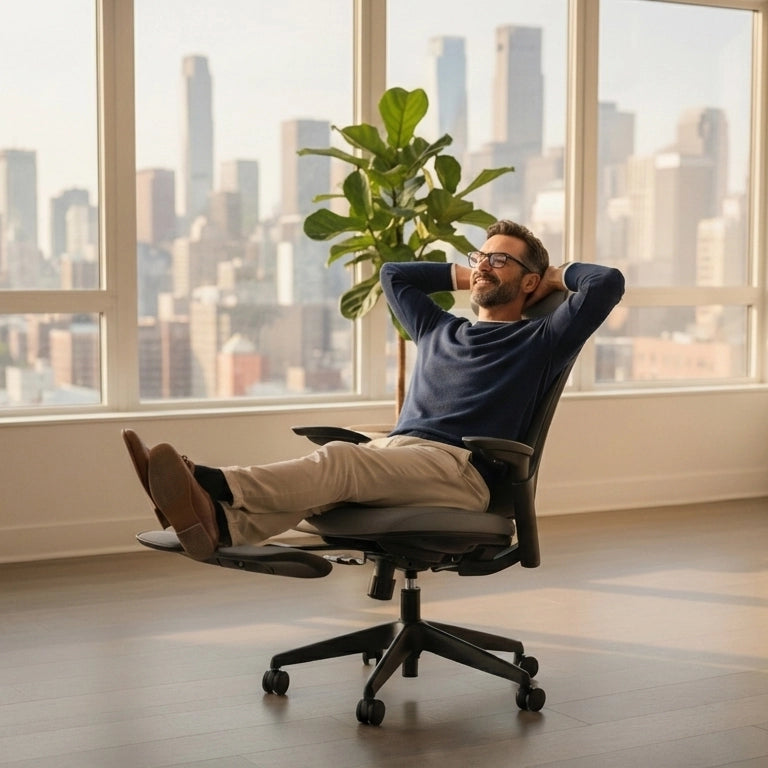
The traditional ergonomic chair typically features a fixed lumbar curve or a manually adjustable knob. While this was a step up from the flat-backed chairs of the past, it carries a significant design flaw: it assumes you are a statue. In reality, a creative designer or a corporate executive is constantly in motion. You lean forward to focus on a complex line of code, you shift to the side to grab a document, or you recline to take a high-stakes call.
When you move in a chair with static support, a "support gap" is created. The moment your spine loses contact with the lumbar cushion, your lower back muscles—specifically the erector spinae—must work overtime to stabilize your torso. This leads to:
- Static Loading: Constant pressure on the intervertebral discs.
- Muscle Fatigue: The "dull ache" that sets in by 2:00 PM.
- Postural Collapse: The inevitable slouching that occurs when your muscles simply give up.
Defining the Future: Dynamic Lumbar Support
Dynamic lumbar support is the technological answer to this problem. Unlike its static predecessors, dynamic support utilizes auto-tracking technology—a flexible, responsive framework that stays in constant contact with the L1-L5 region of the spine. It doesn't require you to stop and turn a dial every time you change positions; instead, the chair "follows" you.
At Sunaofe, we define this as the perfect intersection of ergonomics and aesthetics. Our core philosophy, "So Now Feel," is rooted in the belief that you shouldn't have to choose between a chair that looks like a high-end design piece and one that protects your physical longevity. By understanding the dynamic lumbar support benefits, professionals can transition from a state of physical strain to a state of "flow."

Research into sedentary behavior suggests that the average U.S. professional sits for approximately 10 to 13 hours a day. Without a system that accommodates micro-movements, the risk of developing chronic musculoskeletal disorders increases exponentially. This is why we have engineered solutions like how Morph's auto-tracking lumbar support helps, which acts as a proactive health tool rather than just a place to sit.
As we look closer at the specific health advantages in the following sections, it becomes clear that dynamic support is not just a luxury feature—it is the new baseline for anyone serious about their performance and their spinal health in the modern digital age.
The Science of Movement: Dynamic vs. Static Support
To understand why the shift toward active seating is so critical, we must first examine the mechanical conflict between a static chair and a dynamic human spine. When comparing dynamic lumbar support vs static lumbar support, the difference is effectively the difference between a rigid cast and a high-performance suspension system. A static chair provides support only when you are in one specific, "ideal" posture. The moment you shift, that support vanishes, leaving your lower back to bear the full weight of your upper body.
The physiological consequences of this "support gap" are significant. The human spine is comprised of 24 movable vertebrae, and the lumbar region (L1 through L5) carries the heaviest load. Unlike muscles, intervertebral discs do not have a direct blood supply. They rely on a process called "imbibition"—essentially a sponge-like mechanism where movement creates the pressure changes necessary to pump nutrients in and waste products out.
The Physiological Importance of Micro-movements
This is where the primary dynamic lumbar support benefits become scientifically evident. Dynamic support facilitates "micro-movements"—the tiny, often subconscious adjustments our bodies make every few minutes. In a chair equipped with auto-tracking technology, the lumbar pad remains in constant contact with the lower back, regardless of the angle of the torso.

By encouraging these micro-movements, dynamic support helps prevent "static loading." Static loading occurs when muscles are held in a constant state of tension to compensate for a lack of external support. Over time, this leads to:
- Reduced Blood Flow: Constricting the vessels that supply oxygen to the lower back muscles.
- Disc Compression: Increasing the internal pressure on the discs, which can lead to bulging or herniation.
- Ligament Strain: Placing undue stress on the connective tissues that stabilize the spine.
According to health experts at the Mayo Clinic, the risks of prolonged sitting are best mitigated not just by standing, but by ensuring that sitting time is as active and supported as possible. Their research indicates that sitting for long periods without postural variation is linked to a cluster of metabolic and musculoskeletal issues.
Bridging the Gap with Adaptive Engineering
For the modern professional, the goal is to find a chair that acts as a partner in movement. This is why we developed the Morph Series. By understanding how Morph’s auto-tracking lumbar support helps facilitate these essential spinal micro-movements, users can avoid the "locked-in" feeling of traditional office furniture. One of the most overlooked dynamic lumbar support benefits is the reduction of cognitive load.
Why Your Home Office Needs Auto-Tracking Technology
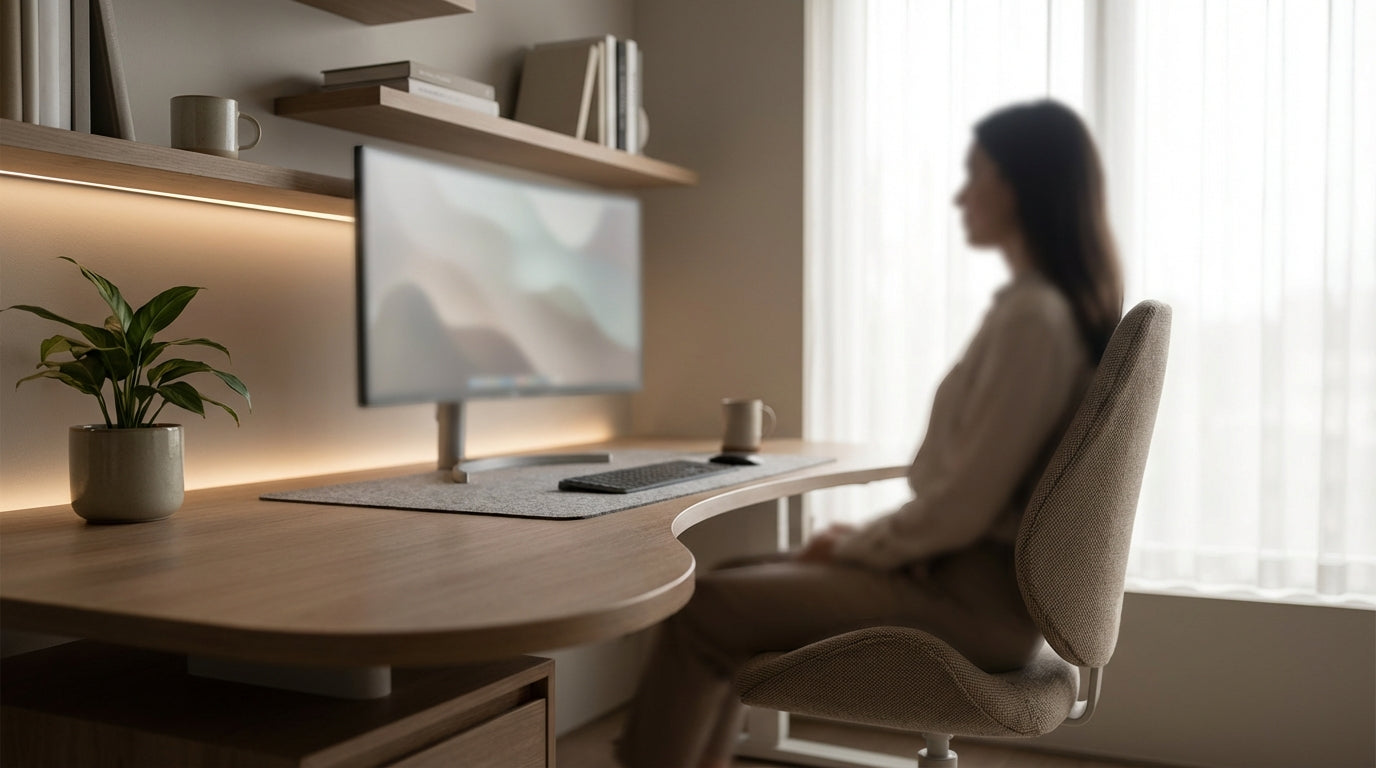
For many remote professionals, the transition to a home office was born out of necessity, often resulting in "makeshift" ergonomic setups that prioritize space over spinal health. Even those who invested in standard office chairs frequently find themselves battling a familiar foe: the mid-afternoon back ache. Understanding the dynamic lumbar support benefits is the first step in transforming a home office into a sanctuary of productivity.
Eliminating the "Static Freeze"
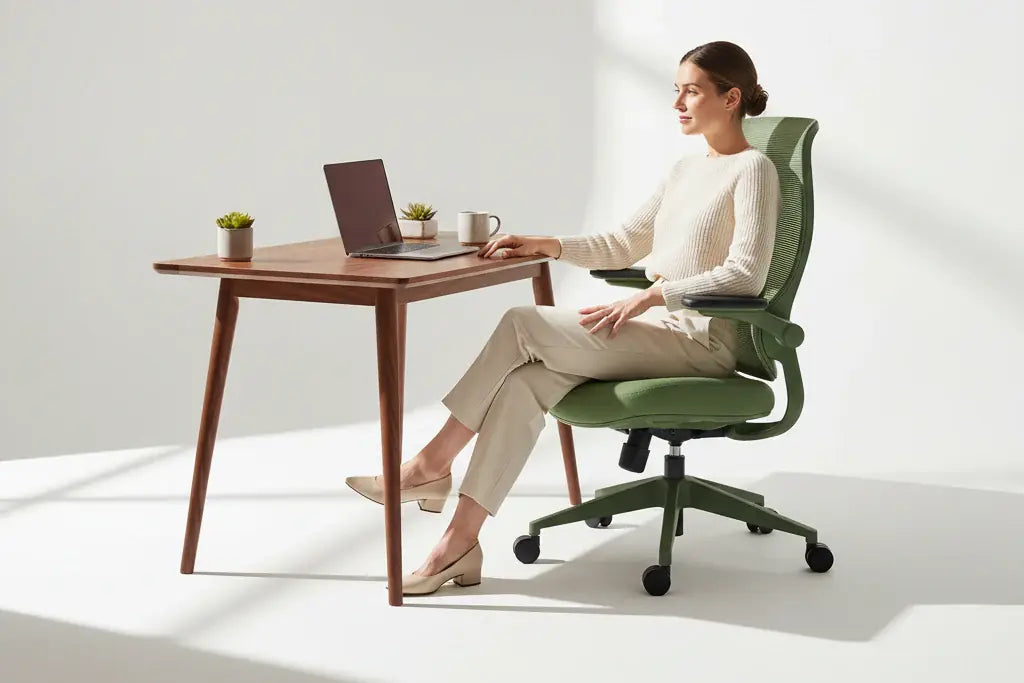
One of the most significant challenges of remote work is the lack of natural movement. To learn how to reduce lower back stiffness during long work hours, you must introduce a chair that moves with you. Auto-tracking technology, like that found in the Sunaofe Morph Series, acts as a responsive partner. When you lean forward to analyze a spreadsheet, the lumbar support follows your spine, maintaining the natural "S" curve.
The specific benefits of auto-tracking lumbar support for back pain relief center on the L1-L5 vertebrae. By utilizing adaptive ergonomic seating that responds to every shift in weight, you are effectively preventing spinal fatigue. When your chair provides a constant, self-adjusting counter-pressure, it offloads the work from your soft tissues to the chair’s mechanical structure.
A Workspace Built for Longevity
At Sunaofe, we believe that your home office should be an investment in your future self. Because we understand that high-end furniture is a significant decision, we back our engineering with a comprehensive Sunaofe warranty, ensuring that your path to a pain-free workspace is protected for years to come.
Boosting Productivity Through Postural Alignment
In the high-stakes world of modern business, a critical component of professional performance is the physical state of the body. When you understand the dynamic lumbar support benefits, you realize that an ergonomic chair is a performance-enhancing tool designed to keep your mind sharp by keeping your body supported.

The primary way how dynamic lumbar support improves posture while working is by maintaining the spine’s natural alignment without conscious effort. This facilitates better circulation and reduces the "cognitive load" required to maintain your position. When your brain isn't subconsciously processing signals of discomfort, it can dedicate 100% of its neural resources to creative tasks.
Minimizing Distractions in the Home Office
For those specifically creating an ergonomic office setup for chronic back pain, the goal is the elimination of physical distractions. Research published by Forbes suggests that employee wellness is the new productivity standard, noting that physical discomfort leads to significant "presenteeism"—where an individual is at their desk but not fully functioning.
To achieve true "deep work," an individual must enter a state of total immersion. When you invest in how Morph’s auto-tracking lumbar support helps facilitate seamless movement, you are removing the friction between your body and your work. This results in:
- Reduced Muscle Fatigue: Preserving physical energy for after-work activities.
- Enhanced Mood: Lower stress levels linked to physical comfort.
- Sustained Concentration: A supported spine leads to a more alert nervous system.
Experience the Morph: The Pinnacle of Adaptive Support
The Sunaofe Morph Series stands as a testament to what happens when you design for a living, breathing human being. While many chairs claim to be ergonomic, the Morph Series is engineered specifically to be the ultimate solution for active lumbar tracking. It is the physical manifestation of our "So Now Feel" philosophy.
Key features of the Morph Series include:
- Auto-Tracking Lumbar Support: A self-adjusting system that follows your movement without manual levers.
- Breathable Tech-Mesh: High-tensile mesh that facilitates airflow to keep you cool.
- Multi-Dimensional Adjustability: Customizable armrests and seat depth to accommodate all body types.
Is a High-End Ergonomic Chair Worth the Investment?
For the modern corporate executive, the accurate question is: "What is the cost of not investing in my spinal health?" In the United States, musculoskeletal disorders are a leading cause of lost productivity. When you break down the financial ROI, the dynamic lumbar support benefits transition from a luxury feature to an essential career component.
According to data from the Health Care Cost Institute, the average cost of physical therapy in the U.S. can range from $75 to over $150 per session. By utilizing a chair that offers active tracking, you are effectively paying for a "mechanical therapist" that prevents injury. Furthermore, Sunaofe products are engineered with high-tensile materials, backed by our industry-leading warranty, ensuring long-term durability.
Conclusion
The workspace of the future is no longer a static environment. By prioritizing dynamic lumbar support benefits, you are effectively future-proofing your spine and reclaiming the energy often drained by a sedentary lifestyle. A truly ergonomic workspace offers continuous spinal alignment, enhanced metabolic health, and cognitive longevity.
The evidence is clear: movement is the key to longevity. When you choose top-rated ergonomic chairs with active lumbar support, you are acknowledging that your body is a dynamic system. If you have spent years struggling with the "mid-afternoon ache," it is time to reassess your foundation.
At Sunaofe, our mission is to facilitate the perfect intersection of ergonomics and aesthetics. We invite you to experience the difference firsthand. Explore how Morph’s auto-tracking lumbar support helps align your body and your work. Don't wait for chronic pain to dictate your choices—experience the dynamic lumbar support benefits for yourself today.
Frequently Asked Questions
What are the main benefits of auto-tracking lumbar support for back pain?
The primary benefits of auto-tracking lumbar support for back pain include continuous spinal alignment and the elimination of 'support gaps' that occur when you shift positions. By maintaining constant contact with the lower spine, this technology reduces muscle fatigue and prevents the static loading that leads to chronic discomfort.
Dynamic lumbar support vs static lumbar support: which is better for long hours?
When comparing dynamic lumbar support vs static lumbar support, dynamic systems are significantly better for long hours because they facilitate essential micro-movements. While static support only works in one rigid position, dynamic tracking follows your spine to keep discs hydrated and prevents the 'locked-in' stiffness of traditional chairs.
Is dynamic lumbar support worth it for WFH professionals?
For remote workers, dynamic lumbar support is worth it as a preventative health investment that reduces the long-term need for physical therapy. It helps maintain high productivity by minimizing the physical distractions caused by lower back strain and spinal fatigue during extended work sessions.
How does dynamic lumbar support improve posture while working?
Dynamic lumbar support improves posture while working by automatically responding to your torso's angle, ensuring the natural 'S' curve of your spine is always supported. This prevents the common tendency to slouch or 'postural collapse' that typically happens when professionals lean forward to focus on their screens.
What is the best ergonomic chair for lower back pain relief?
The best ergonomic chair for lower back pain relief is one that features adaptive ergonomic seating, such as the Sunaofe Morph Series. These top-rated chairs use auto-tracking technology to provide customized counter-pressure that responds to every shift in weight, offering a level of support that standard office chairs cannot replicate.

Leave a comment
All comments are moderated before being published.
This site is protected by hCaptcha and the hCaptcha Privacy Policy and Terms of Service apply.