


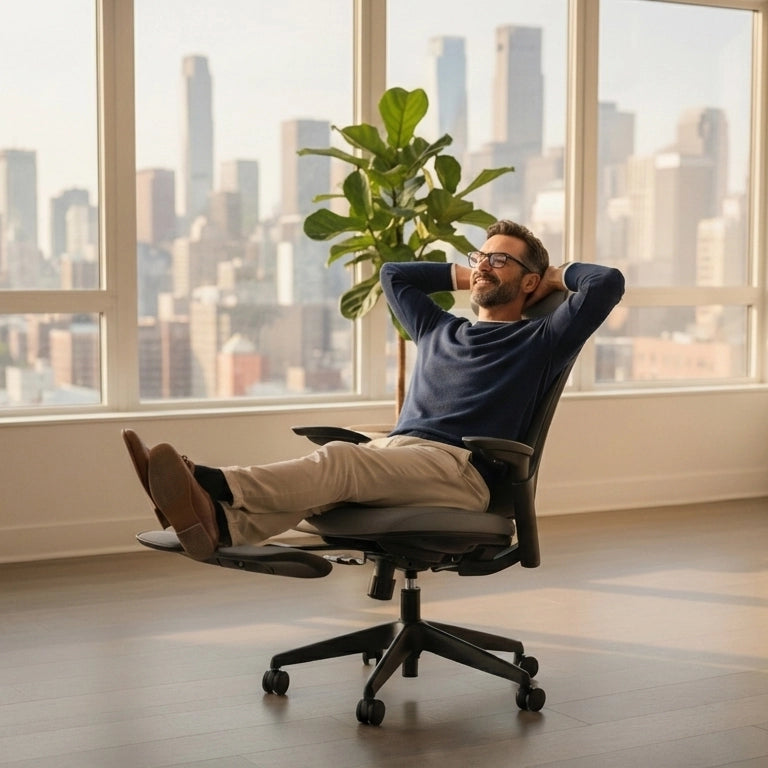
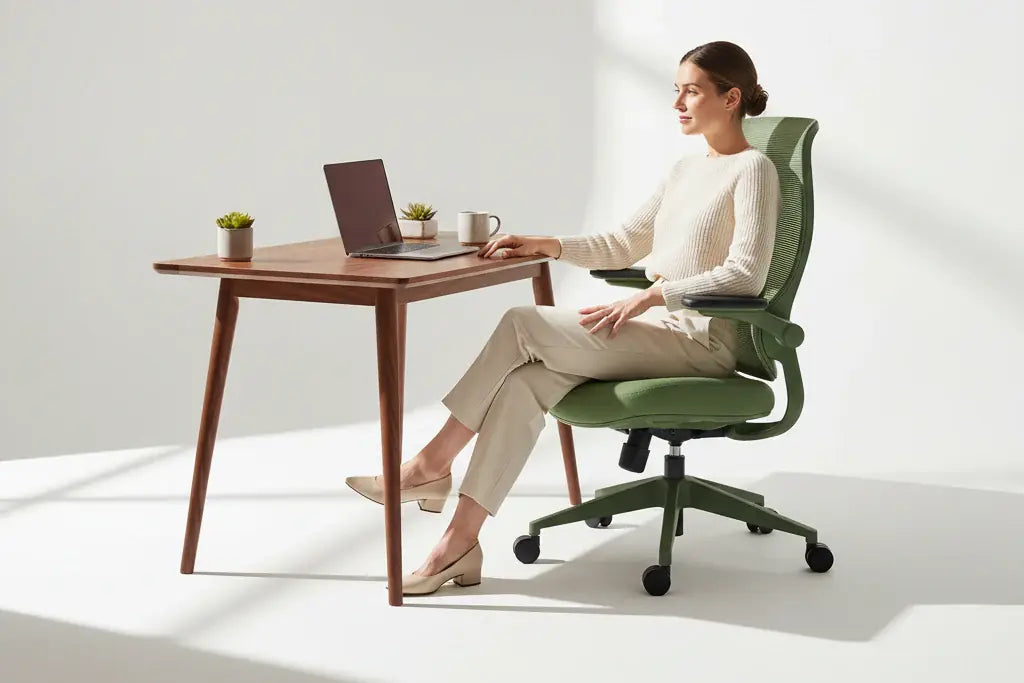
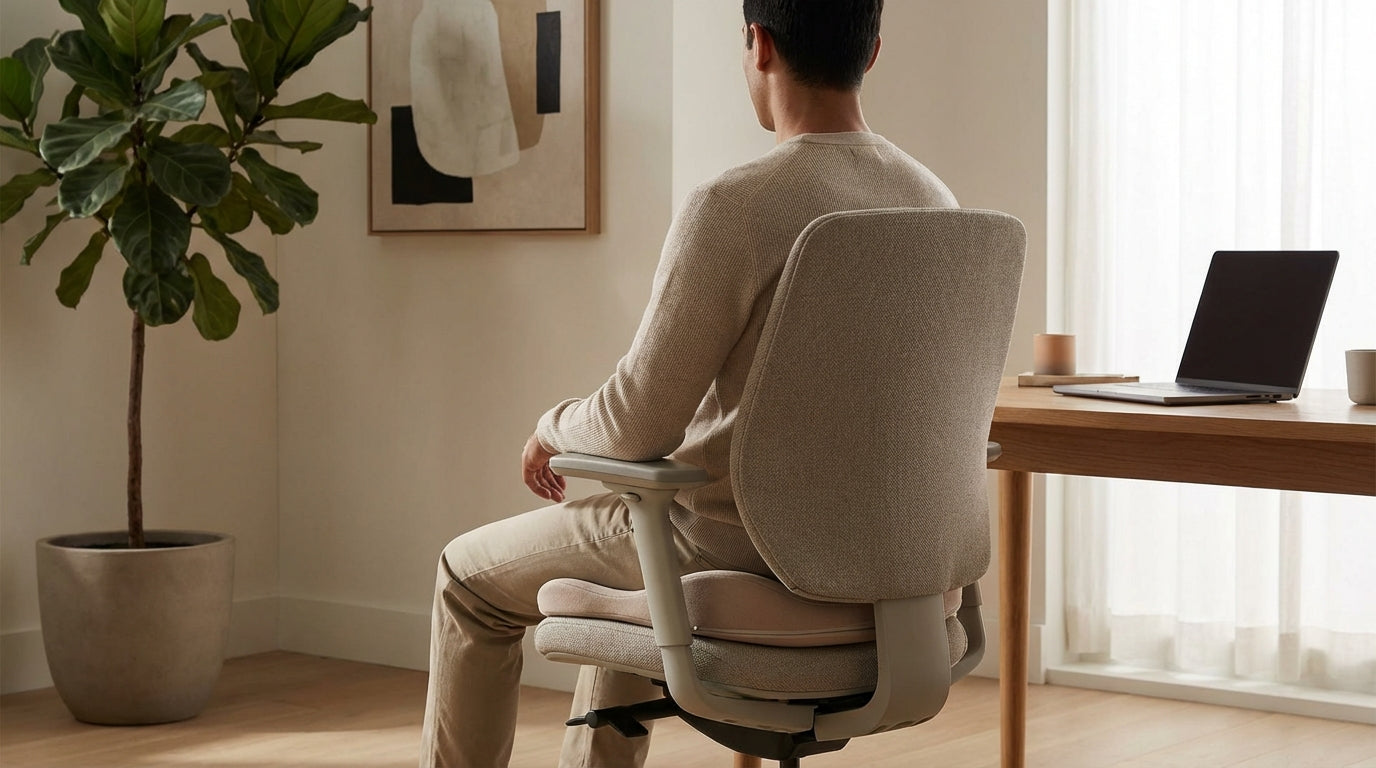
For many professionals across the United States, the boundary between the office and the home has permanently blurred. While the flexibility of remote work has offered a better work-life balance for millions, it has also ushered in a silent health crisis: the "sitting epidemic." As we transitioned from corporate headquarters to spare bedrooms and kitchen tables, our physical health often took a backseat to digital connectivity. Recent health data suggests that the average American adult now spends between 10 and 15 hours a day sitting, a lifestyle shift that has led to a significant surge in chronic musculoskeletal issues, particularly in the lower back.

In this new era of work, a standard chair is no longer just a piece of furniture; it is a critical tool for long-term wellness and professional performance. However, most traditional "ergonomic" solutions have failed to keep pace with the dynamic way we actually work. For years, the industry standard was the static lumbar pillow—a fixed foam cushion designed to fill the gap between the spine and the chair. While well-intentioned, these static supports are increasingly seen as inadequate for the modern professional who doesn't sit perfectly still for eight hours a day.
This is where the intersection of high-end engineering and modern design becomes essential. At Sunaofe, we believe that your workspace should adapt to you, not the other way around. Our core philosophy, "So Now Feel," represents a commitment to creating an environment where physical comfort is so seamless that it allows for total mental immersion. We don't just sell chairs; we provide a workspace experience that balances rigorous health standards with a sophisticated aesthetic.
The primary limitation of traditional office furniture is its rigidity. When you reach for a phone, lean into a video call, or tilt back to contemplate a design choice, a static lumbar support remains fixed in place, often leaving your lower back unsupported during these micro-movements. Understanding the adaptive lumbar support benefits is the first step in reclaiming your physical health. Unlike traditional cushions, adaptive systems are engineered to track your movement in real-time, ensuring that the natural "S-curve" of your spine is protected regardless of your posture.
For the WFH professional, the creative designer, or the corporate executive, the stakes are high. Physical discomfort is the ultimate distraction, breaking the "flow state" required for high-level cognitive work. Relying on a basic lumbar pillow is a reactive approach to pain, whereas investing in technology like Morph’s auto-tracking lumbar support is a proactive strategy for career longevity.
As we dive deeper into the science of ergonomics, it becomes clear that the "sitting epidemic" cannot be solved by simply standing up occasionally. It requires a fundamental shift in how we support our bodies during the hours we are most productive. By leveraging adaptive lumbar support benefits, professionals can mitigate the risks of spinal compression and muscle fatigue, turning their home office into a sanctuary of health and high performance. In the following sections, we will explore the clinical impact of these technologies and why the evolution from static to dynamic support is the most important upgrade you can make for your workspace this year.
The Science of Spinal Health: Why Static Sitting Fails
To understand why traditional office chairs often leave us with a dull ache by 3:00 PM, we must first look at the biomechanics of the human spine. Your spine is not a straight pillar; it is a sophisticated "S" shape designed to distribute weight and absorb shock. The lower part of this curve, known as the lumbar region, is particularly critical. It supports the entire weight of your upper body and facilitates a wide range of motion. However, when we sit in a static position for hours on end, this natural curve often flattens or collapses into a "C" shape, leading to a cascade of physiological issues.
The primary culprit in workspace-related discomfort is spinal compression. When you sit, the pressure on your intervertebral discs—the spongy cushions between your vertebrae—increases significantly compared to when you are standing or walking. In a static chair, this pressure is constant and uneven. Over time, this leads to a phenomenon known as "tissue creep," where the ligaments and discs in your back begin to stretch and deform under a sustained load.

Furthermore, static sitting triggers intense muscle fatigue. Even though you are "resting" in a chair, your core and back muscles are working overtime to stabilize your torso against gravity. Without dynamic support, these muscles eventually tire, leading you to slouch. Slouching further increases disc pressure, creating a vicious cycle of poor posture and pain. According to research highlights from the Mayo Clinic on the risks of sitting, prolonged sedentary behavior is linked to a host of health concerns, but its most immediate impact is often felt in the structural integrity of the back.
This is where the adaptive lumbar support benefits become a biological necessity rather than a luxury. Traditional chairs provide a fixed point of contact that only works if you remain perfectly still—something humans are not designed to do. We are constantly shifting, reaching, and leaning. An adaptive system, like the one found in the Sunaofe Morph series, recognizes these micro-movements. By providing a "living" support system that moves with the user, it ensures that the lumbar curve is maintained regardless of whether you are leaning forward to type or reclining to take a call.
One of the most significant adaptive lumbar support benefits is the promotion of "active sitting." By encouraging small movements while keeping the spine aligned, these chairs help facilitate blood flow to the spinal discs. Unlike other tissues in the body, spinal discs do not have a direct blood supply; they rely on movement to "pump" in nutrients and flush out waste products.
At Sunaofe, our "So Now Feel" philosophy is rooted in this scientific reality. We recognize that for a corporate executive or a creative designer, the ability to maintain spinal health is directly tied to their ability to perform. By integrating adaptive lumbar support benefits into a high-end aesthetic, we provide a solution that addresses the mechanical failures of static sitting. Transitioning to a workspace that respects the science of your spine is an essential investment in your long-term physical resilience.
Dynamic vs. Static: The Evolution of Lumbar Support
For decades, the ergonomic industry operated under a simple premise: if a chair had enough levers and knobs, it was considered "customizable." This led to the era of static lumbar support—fixed cushions or manual dials designed to lock the spine into a single, supposedly "perfect" position. However, as our understanding of human physiology has advanced, we’ve realized that the body isn’t meant to be locked into place. The evolution from static to dynamic support represents a paradigm shift in how we approach workspace wellness.
The primary drawback of static lumbar support is its inability to account for the reality of human movement. No professional sits perfectly still for eight hours. Whether you are leaning forward to scrutinize a complex spreadsheet, reaching for a second monitor, or reclining during a brainstorming session, a static support remains in one fixed spot. This often results in a physical "disconnect" where a gap forms between the chair and the lower back. In contrast, the adaptive lumbar support benefits center on the concept of "auto-tracking."

Why is this distinction so critical for long-term health? Reducing spinal pressure with auto-adjusting lumbar chairs is one of the most effective ways to prevent repetitive strain and chronic injury. When a chair adapts to your movement, it ensures that the load on your intervertebral discs remains evenly distributed, even as you shift. Manual "one size fits all" adjustments frequently fail because they rely on the user having both the time and the specialized ergonomic knowledge to set the chair correctly.
At Sunaofe, we have moved beyond the era of manual frustration. Our design philosophy focuses on "intelligent ergonomics," where the furniture does the work for you so you can focus on the task at hand. The Morph's auto-tracking lumbar support is a prime example of this evolution. It eliminates the guesswork of manual levers by providing a responsive backrest that cradles the lumbar region through every twist and turn. By harnessing these adaptive lumbar support benefits, professionals can maintain peak physical alignment without having to stop their workflow.
Ultimately, the shift toward dynamic support is about more than just comfort—it’s about precision and efficiency. For the tech-savvy professional or the corporate executive, every tool in the office should contribute to a seamless experience. A chair that requires constant manual intervention is an inefficient tool that breaks concentration. Embracing the adaptive lumbar support benefits ensures that your furniture is an active partner in your health, rather than a static obstacle to it.
Achieving the Perfect Flow: How Adaptive Support Improves Posture
In the world of high-stakes professional work, productivity is often measured by the ability to enter a "flow state"—that psychological pocket of deep concentration where time disappears and creative output peaks. However, the greatest threat to this state is the subtle, nagging onset of physical discomfort. When your lower back begins to ache, your brain pivotally shifts its resources from problem-solving to pain management. Achieving the perfect flow requires a workspace that removes these physical barriers, which is precisely how adaptive lumbar support improves sitting posture by following your every move.
True ergonomic posture is not a rigid, military-style pose held for hours. Instead, it is a dynamic relationship between the body and the chair. Throughout the day, we perform hundreds of "micro-movements." In a traditional chair, each of these movements creates a momentary lapse in spinal support. Over the course of an eight-hour day, these hundreds of unsupported moments accumulate into significant muscle strain. One of the primary adaptive lumbar support benefits is its ability to eliminate these gaps.

This continuous support has a profound impact on mental focus. When the body feels physically secure and aligned, the nervous system remains in a state of calm. This physiological calm is the foundation of the flow state. By investing in a chair that offers Morph's auto-tracking lumbar support, professionals can ensure that their physical environment actively sustains their mental performance. This technology doesn't just prevent pain; it preserves cognitive energy.
For those who spend the majority of their day at a desk, this is arguably the best office chair feature for long hours with adaptive support. Standard ergonomic chairs often provide a "sweet spot" of comfort that only exists in one specific seated position. Adaptive systems, however, expand that sweet spot to cover the entire range of seated motion. Without the adaptive lumbar support benefits providing a constant safety net, long sessions would inevitably lead to "postural collapse"—the point where fatigue forces the body into a deep, harmful slouch.
As highlighted in various workspace trend reports by outlets like Forbes, the modern "high-performance" office is increasingly defined by tools that prioritize the user's biological needs. At Sunaofe, our "So Now Feel" philosophy is built on the idea that your furniture should be an invisible partner in your success. When your chair handles the complexities of spinal alignment automatically, you are free to dedicate 100% of your focus to the work that matters most. In the end, the perfect posture isn't something you "do"—it's something your chair allows you to "be."
The Sunaofe Morph Experience: Professional Ergonomics Redefined
While many brands claim to offer ergonomic solutions, the Sunaofe Morph series represents a masterclass in the intersection of high-end engineering and modern aesthetics. It is the physical embodiment of our "So Now Feel" philosophy—a chair designed not just to be sat in, but to be experienced. For the modern professional, the Morph isn't just a piece of office furniture; it is a sophisticated tool that redefines what it means to work comfortably.
The centerpiece of the Morph experience is its proprietary auto-tracking technology. Most chairs on the market require the user to reach back and fiddle with levers to find a comfortable position. The Morph eliminates this friction entirely. Its lumbar system is engineered to follow the unique curvature of your spine in real-time. This seamless transition is one of the most celebrated adaptive lumbar support benefits found in the Morph series, as it ensures that the user is never left without proper spinal alignment.
For creative designers and tech-savvy individuals, the Morph offers a level of responsiveness that feels almost intuitive. When you are deep in a project, the last thing you want to think about is your chair. The Morph’s ability to "morph" its support to your body’s micro-movements allows for a level of physical freedom that static chairs simply cannot match. This is why many industry professionals consider it the best ergonomic office chair with auto-tracking lumbar support.
Corporate executives also find that the Morph fits perfectly into a high-stakes professional environment. It carries an air of "Executive Status" without the bulky, dated look of traditional leather office chairs. Beyond the aesthetics, the adaptive lumbar support benefits provide the physical stamina required for long hours of leadership. To ensure that these high-performance environments are fully supported, Sunaofe also offers tailored enterprise solutions for organizations looking to upgrade their entire executive team’s wellness.
Key highlights of the Sunaofe Morph series include:
- Auto-Tracking Lumbar Support: A dynamic system that moves in three dimensions to cradle the lower back.
- Breathable Tech-Mesh: Designed to regulate temperature and provide firm yet flexible support.
- Multi-Dimensional Armrests: Allowing for the perfect ergonomic setup for typing or designing.
- Precision Recline Tension: Ensuring that the chair supports your weight effortlessly at any angle.
Ultimately, the adaptive lumbar support benefits of the Morph series are about more than just preventing back pain; they are about enhancing your lifestyle. By choosing a chair that balances health with a sophisticated modern design, you are making a statement about your priorities. You value your well-being, you value your work, and you value the space in which you create. The Morph doesn't just support your back—it supports your ambition.
Is Adaptive Lumbar Support Worth It for Your WFH Setup?
When building a home office, it is easy to prioritize the latest laptop or a high-resolution monitor. However, for the professional who spends forty or more hours a week at a desk, the most critical piece of technology is the one that supports their physical frame. To analyze the ROI of an ergonomic office setup for lower back pain relief, one must look at the long-term health and productivity gains rather than the initial sticker price.
The financial reality of chronic back pain is staggering. In the United States, lower back pain is a leading cause of missed work days and a primary driver of healthcare expenditures. When viewed through this lens, a chair equipped with adaptive lumbar support benefits is not a luxury purchase; it is a preventative health investment. By providing a dynamic support system that mitigates spinal compression before it leads to chronic injury, you are essentially purchasing a "health insurance policy" for your spine.
Beyond the clinical benefits, there is the undeniable impact on daily productivity. If you spend just fifteen minutes a day shifting in your seat or stretching to alleviate a dull ache, that accumulates to over 60 hours of lost focus per year. By leveraging adaptive lumbar support benefits, you reclaim that time. The ability to remain in a "flow state" without the distraction of physical strain translates directly into higher quality output and professional growth.
Choosing a chair that offers Morph's auto-tracking lumbar support also addresses a common pain point: the "medical" aesthetic. Sunaofe’s core value ensures that your health doesn't come at the cost of your home’s decor. When choosing a chair, look for sleek silhouettes and premium materials that complement your workspace. A well-designed chair should be a centerpiece of your office, signaling a commitment to both professional excellence and personal wellness.
To help you make this choice with confidence, consider the following criteria for your WFH setup:
- Responsiveness: Does the chair adjust to you automatically?
- Material Quality: Is the mesh designed for long-term durability and breathability?
- Aesthetic Harmony: Does the design fit the modern minimalist look of your home?
- Long-Term Support: Does the manufacturer stand behind the product?
Ultimately, investing in a high-end ergonomic chair is a statement of self-worth. At Sunaofe, we provide peace of mind by ensuring that your purchase is a long-term investment in your health, backed by industry-leading support. When you weigh the adaptive lumbar support benefits against the hidden costs of a sedentary lifestyle—lost time and diminished focus—the decision to upgrade becomes clear. Your future self will thank you for the investment you make today.
Conclusion
As we have explored throughout this comprehensive guide, the modern workspace is no longer defined by four walls and a corporate cubicle. It is defined by the tools that empower us to perform at our peak. In an era where the "sitting epidemic" poses a legitimate threat to professional longevity, the choice of office furniture has shifted from a matter of interior design to a critical health decision.
The primary takeaway for any professional is that your body is your most valuable asset. The adaptive lumbar support benefits we have discussed are the biological safety nets that allow you to engage in deep work without the looming threat of chronic pain. By prioritizing a chair that tracks your micro-movements and maintains the natural "S-curve" of your spine, you are making a conscious choice to invest in your future productivity.
At Sunaofe, our core philosophy is built on the belief that you should never have to choose between a chair that looks like a medical device and one that causes you physical harm. Our slogan, "So Now Feel," is an invitation to experience a workspace where the furniture becomes invisible, allowing your focus to remain entirely on the task at hand.
The final verdict is clear: the standard "one size fits all" approach to office seating is a relic of the past. To thrive in the modern WFH or executive landscape, you need a solution that is as dynamic as your daily workflow. The adaptive lumbar support benefits found in the Sunaofe Morph series provide the ultimate realization of this goal. By integrating auto-tracking technology with a sleek silhouette, the Morph series ensures that your home office remains a sanctuary of health.
As you look to the future of your career, consider the long-term impact of your current setup. It is time to move beyond the limitations of traditional furniture and embrace a workspace that respects your biology. Whether you are looking to alleviate existing discomfort or proactively protect your health, the transition to intelligent ergonomics is the single most impactful upgrade you can make.
We invite you to transform your workspace and experience the difference that precision engineering can make. Explore the Morph's auto-tracking lumbar support and discover why professionals across the United States are choosing Sunaofe to redefine their professional experience. If you are looking for enterprise solutions for your entire team, our experts are here to help. Your journey to a pain-free, high-performance workspace begins with a single choice: the choice to "So Now Feel" the future of ergonomics.
Frequently Asked Questions
What are the main adaptive lumbar support benefits for lower back pain?
The primary adaptive lumbar support benefits for lower back pain include continuous spinal alignment and the significant reduction of pressure on intervertebral discs. Unlike static chairs, these systems move with you to prevent the 'C-slouch' that leads to chronic soreness during long workdays.
How does dynamic support compare to a standard lumbar pillow?
When evaluating the benefits of dynamic vs static lumbar support, dynamic systems offer a responsive 'auto-tracking' feature that follows your micro-movements in real-time. Standard pillows remain in a fixed position, which frequently leaves the lower back unsupported when you lean forward or recline.
What is the best ergonomic office chair with auto-tracking lumbar support?
The Sunaofe Morph series is widely considered the best ergonomic office chair with auto-tracking lumbar support because it seamlessly blends tech-heavy functionality with high-end aesthetics. It is specifically engineered for WFH professionals and executives who require consistent spinal cradling during long hours of deep work.
Is investing in adaptive lumbar support worth it for a WFH setup?
An ergonomic office setup for lower back pain relief is a vital preventative health investment that can reduce future medical expenses and prevent lost productivity. Adaptive systems ensure you remain in a comfortable 'flow state' by eliminating the physical distractions caused by muscle fatigue and spinal compression.
How exactly does adaptive support help improve sitting posture?
Adaptive lumbar support improves sitting posture by automatically filling the gap between your lower spine and the chair backrest as you shift positions. This ensures your spine maintains its healthy natural S-curve, preventing the postural collapse common in traditional, non-responsive office seating.

Leave a comment
All comments are moderated before being published.
This site is protected by hCaptcha and the hCaptcha Privacy Policy and Terms of Service apply.